


The Pure Pod Season 2 Episode 3: ACL injuries in female athletes
Natasha Doyle
Clinic Manager & Physiotherapist
- 18 March, 2026
- Podcast
- healthcare
- 8 min read
Research shows that women are three to eight times more likely to experience an injury to their ACL than men. We discuss the stats, potential reasons and pathways to recovery in the latest episode of the Pure Pod.
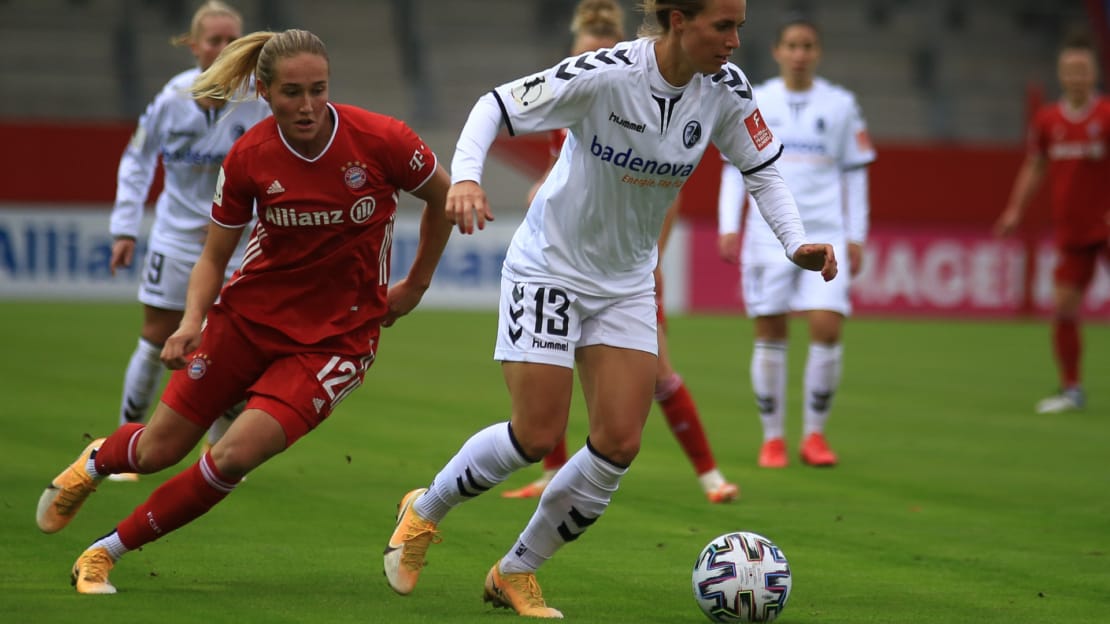
Anterior cruciate ligament injuries are one of the most dreaded injuries for athletes across all sports and disciplines. Crucial in stabilising the knee and facilitating explosive movement and quick changes of direction, a tear to the ligament often requires surgery and lengthy rehab to return the patient to their previous level of mobility and to stave off long-term pain and instability.
Recent medical research shows that women are three to eight times more likely to experience an injury to their ACL than men. One study estimated a multisport female athlete aged between thirteen and eighteen has a 10% risk of injuring the ligament. In 2023, nearly 30 female footballers missed out on the World Cup due to ACL injuries, drawing media attention to the prevalence of the injury. Earlier this year, FIFA announced a fund to research the trend in more detail.
Why are rates of ACL injuries continuing to climb for female athletes? What are the causes of these injuries? And how can female athletes return to their best after experiencing a lengthy layoff?
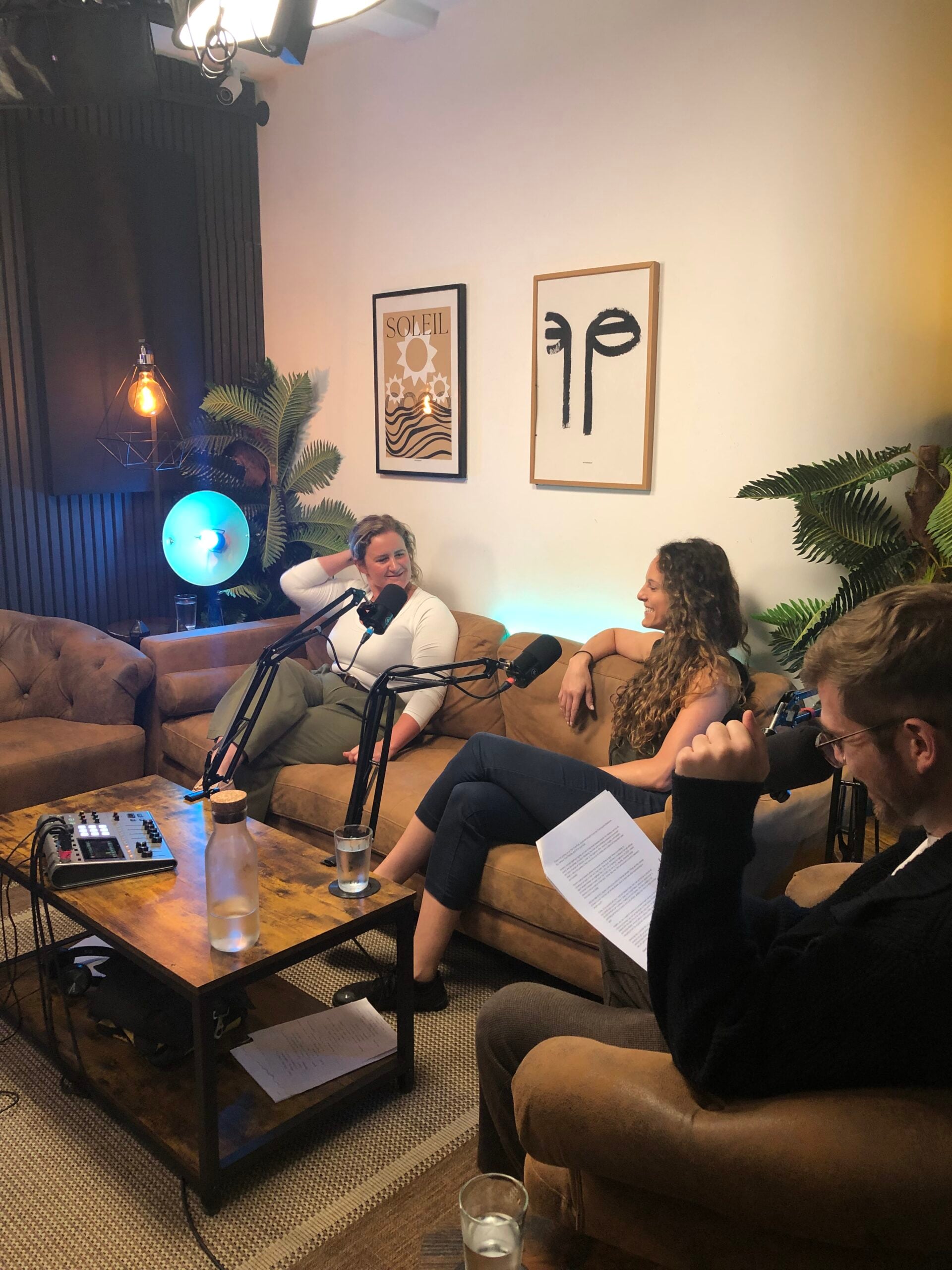
We put those questions to Amy Todd and Natasha Doyle, on the latest episode of The Pure Pod.
Amy has worked as a physio at top football clubs including Chelsea, Fulham and Crystal Palace, where she spent over a decade developing her expertise in treating lower limb injuries. She has a passion for optimising performance in women and youth athletes, guiding their return to their chosen sport.
Natasha also has a wealth of experience in professional sport, serving as the head of medicine at Swindon Town and as head physio for North Harbour Women’s Rugby in New Zealand after she called time on her own elite rugby career. Her passion also lies in working with female athletes, and she believes in taking a holistic approach to patient management focussing on both the physical and mental aspects of injury and rehabilitation.
You can watch the full conversation on our Youtube channel. The Pure Pod is available to download on all major podcast platforms, including Spotify and Apple Podcasts.
Here are the topics we covered:
- The role of the ACL in the knee (01:00)
- The sports that carry greater risk of ACL injury (02:00)
- Why research suggesting hormonal changes could be the reason behind greater injury risk for women is incomplete (02:45)
- How women can tailor training around their menstrual cycle (10:15)
- The societal factors in increasing injury risk for female athletes (12:30)
- Biomechanical differences between male and female athletes (18:45)
- Whether men and women are treated differently following a significant ACL injury (26:30)
- How an MDT might approach ACL rehabilitation programs (31:00)
- The need for research into female athletes and their injury risks (37:30)
Hi Natasha, hi Amy. Could we start with an explanation of the role of the ACL within the knee joint?
Amy Todd: The ACL is a very important ligament in the knee. It’s a key stabilising ligament. Its predominant role is to stop the lower leg — so the tibia and the shin bone — sliding away from the femur. That’s called anterior translation.
Another role is to provide stability during rotation. It also provides proprioceptive feedback to the brain, so it can tell the brain where the knee is in space.
Natasha Doyle: There are a lot of nerve endings and receptors that provide a feedback loop that can modify where the joint is in relation to where the rest of your body is, and to different stimuli that are coming at you.
Are there any specific sports where there is a greater risk of ACL injury?
Natasha: Anything that is reactive. That can include sports like netball, football, tennis, rugby, skiing, anything where there is that torsion on the knee. Most of the injuries come from non-contact incidents: it’s about 70 to 75%. It typically happens when you change direction or you’re decelerating.
Other aspects may be a lateral blow on the knee. That can happen in sports like rugby, or even football. You have that mixture of contact and non-contact sport, and those dynamic games where you’re reacting to not only your own body stimuli, but also with other people on the field of play
The prevalence of ACL injuries in female athletes has become more widely known lately. What does the most recent research suggest is the reason behind this phenomenon?
Amy: There’s a lot more recent evidence around hormonal changes. Obviously, men and women have completely different hormonal profiles, and they have differences in anatomy which can have an effect on biomechanics.
Natasha: There’s no real general consensus from the research. We don’t know all the reasons behind the greater prevalence, but like you said, it’s between three and eight times more likely that a female athlete will rupture their ACL.
There’s a whole variety of things that are leading to that, to the point that we can’t just say ‘it’s because of a hormonal change, or the cue angle in your biomechanics’.
Amy: It’s nice to see more chat around hormonal profiles in general, though. It’s an area where women actually have known so little for such a long time. There’s a gap in knowledge there.
There’s still a gap in the research and evidence, thanks in part to it being difficult to control scientifically. Some people are very sensitive to changes and fluctuations of their hormones. Everyone’s cycle is very different in terms of lengths and presentation.
Natasha: If we look at the cycle it’s Oestrogen and Relaxin that are the two hormones that could make an impact on ligament laxity. When you look at type one Collagen fibres and how they synthesize that support the tendons and ligaments themselves, that is fluctuating constantly during a typical 28 to 35 day cycle. But it’s not always the case that female athletes have a normal cycle.
So you can’t necessarily pinpoint to a point in a cycle where you can say there’s a greater risk of injury?
Natasha: There’s a lot of studies currently being done, and I’m not hanging my hat on these, that could possibly suggest that doing the ovulatory phase, when your Oestrogen and Relaxin levels are high, that a female athlete might be more at risk of ligament injury.
Amy: From the athletes I’ve worked with, the biggest indicator might actually just be subjective feeling. So it could be confidence levels. Have they had an ACL injury before? I worked with an athlete that suffered three ACL injuries, and she really felt that at certain parts of her cycle she didn’t feel confident to do X,Y, or Z. She had modified her training according to that. Others feel they might have different recovery times at certain points of their cycle. I’ve worked with other athletes that didn’t want to know, or think about it, because they didn’t want any interference psychologically. It’s dependent on personal individual response.
There also might be societal factors involved in this as well. That could be the type of sport women are pushed towards, access to facilities or the right type of equipment.
Natasha: Professionalisation of men’s sport at the elite levels has had a big impact. Women are training after working hours. They’ve done their normal career, and then play at the highest level of rugby or football they can.
There’s a woman playing for Samoa in the Rugby World Cup who has four children at home. I was thinking, ‘sorry?’ This woman is a school teacher, has four children at home and she’s playing at the Rugby World Cup! Hats off to her, but is she an injury risk waiting to happen?’
Amy: If you’re looking at the professional level, resources, training, equipment is a big factor. But if you’re looking back to the general public: when do we build all of our neuromuscular control and take advantage of our learning potential and neuroplasticity? It’s when we’re in our mid to early teens. When I look back at school, I was probably one of the only girls in my class that loved PE. That comes down to confidence. It comes down to a picture of what is ladylike. Back in the day, boys went straight to the football pitch, for girls they might be pushed towards swimming. Girls aren’t brought up to think, ‘I should start lifting weights’. They don’t want to look bulky, but for guys that’s the starting baseline.
Could you explain the biomechanical factors in a bit more detail?
Natasha: We are built differently from guys. So we have a thing called a Q angle; so a bigger angle from the pelvis down towards the knee. That creates more valgus force, where the knee drops a bit more. That’s not something we can change, but it’s something we can train around.
We are naturally more quad dominant as females. We know that muscle imbalance between quads and hamstrings will impact the stability of the knee and the ACL.
Do you have some strength and conditioning tips for counteracting that?
Natasha: The big thing is quality.
I’d always recommend getting an S&C coach who can look at your mechanics, your movement patterns and work out where the potential deficits lie to create a tailored plan to minimise injury risk.
Amy: A lot of what we do is looking at the kinetic chain, starting at the hips down to your feet. So someone might go away and smash a load of single leg sit to stand for example, and they’re doing it fine enough, but what they aren’t doing is looking in a mirror to make sure they’re at the right angle. There are some great standardised warm-ups, so the FIFA 11-plus for example.
Natasha: You can then build up from there with actual weightlifting. Getting under load, to really build that resilience and enhance your athletic performance while decreasing your injury risk.
Would you treat a female athlete with an ACL tear differently from a male?
Natasha: In the grand scheme of things, I wouldn’t treat a male and female differently. Every patient is individualised anyway. So a male may come in with no training history who did his ACL playing five-a-side in the park with his mates. Then I might have a female who was actually elite skiing and was in the gym six times a week.
Sex is a factor and a consideration, but isn’t the determining factor on how we plan a rehab program. There would be things I’d consider more. I’d be asking about your menstrual cycle, have you had any children, do you have endometriosis or pelvic floor issues. Towards the end of the rehab I might look more at landing mechanics with a female athlete, but if a male said they had poor proprioceptive control or neuromuscular control, then I’ll address that with them.
How might you work alongside other colleagues in an MDT to help a patient get back to their best post-ACL tear?
Amy: It depends on how they present. Have they come in from a surgeon, or did they contact the physio first. We need to categorise the injury, and then talk them through their options. So that would be treating it non-surgically, with an operation or through newer techniques such as cross-bracing.
Within the wider MDT we have exercise physiologists. They’re amazing with end stage return plyometrics, helping people achieve their strength and conditioning goals.
Natasha: We can consult throughout, that’s the big thing. A patient will have a plan as soon as they’re diagnosed to get them back into playing sport nine to 12 months later. You’ll have input along the way, helping us as physios create the best environment for recovery.
Underpinning this chat has been the sense that there’s a lack of research into female athletes in general, not just related to ACL injuries. How important is it that we funnel resources towards female-centric research?
Natasha: It’s so important. Women’s sport is growing more and more, not just in the professional sense. We need to keep females in the games they love.
Amy: Think about that stat. Women are *two to eight times more likely to injure their ACL than a man. That’s crazy. We’re doing a disservice to women allowing that stat to remain. If we look at the wider implications of that, we need to empower women to be active. That’s how we become healthy. It’s how we fight disease. It’s important to look at the bigger picture. We need to give women confidence.
Thanks for listening to this episode of The Pure Pod, a podcast brought to you by Pure Sports Medicine. You can catch up on Season 1, and hear every episode of Season 2 by following us on the podcast provider of your choice. It’s available to download on Apple Podcasts, Spotify, or wherever you get your podcasts. You can also watch every episode of Season 2 by subscribing to our Youtube channel.
Planning on your first triathlon? Looking to make that step up in distance? Nursing a nagging injury that is keeping you from training? Our Triathlon screening process helps you perform to your absolute best come race day. Click here, to find out more.
Related Posts

Advice
Over the last 20+ years our experts have helped more than 100,000 patients, but we don’t stop there. We also like to share our knowledge and insight to help people lead healthier lives, and here you will find our extensive library of advice on a variety of topics to help you do the same.
OUR ADVICE HUBS See all Advice Hubs