


The Pure Pod Season 2 Episode 6: How Exercise Supports Cancer Treatment and Recovery

Jessica Patel
Advanced Physiotherapy Practitioner
- 22 June, 2026
- Podcast
- Exercises Medicine
- cancer rehab
- Physiotherapy
- Strength & Conditioning
- 7 min read
It is expected that 50% of people in the UK born after 1960 will get cancer.
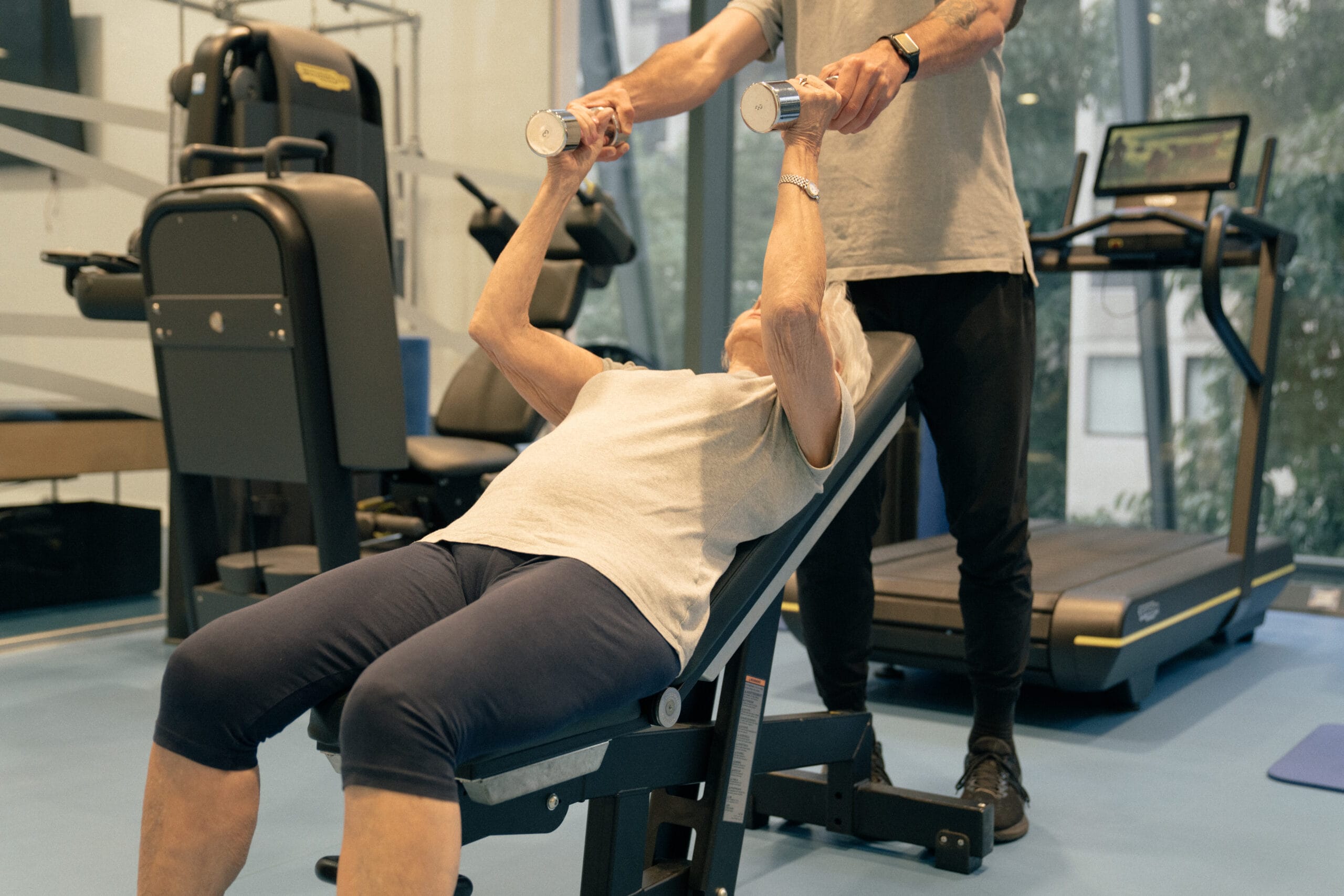
With so many of us likely to be afflicted by the disease, we are on a mission to inform patients how they can return to a higher quality of life both during and after acute treatment.
A cancer diagnosis brings a range of side effects and experiences. Some survivors experience complications for years after their diagnosis and treatment; fatigue and loss of independence can result in declining physical function and quality of life.
Research shows that survivors, and patients currently undertaking treatment for cancer, can safely engage in exercise, improving their physical fitness, function and quality of life. Not only can that mitigate symptoms, but it can also reduce recurrence. Some studies show that exercise reduces risk of recurrence by an average of 30% when comparing active survivors to inactive ones.
How much exercise should cancer patients be undertaking? Are there specific types of exercise that can help with recovery, and lower recurrence risk? How can exercise help with a patient’s mental wellbeing, as they take on arduous treatment programs?
To discuss these topics in more detail, Dean Sutton, a strength and conditioning coach; and physiotherapist, Jessica Patel, who are both specialists in cancer rehab, joined us on the latest episode of the Pure Pod.
You can watch the podcast in full above, listen on the podcast platform of your choice, or read on for highlights from the conversation.
Here’s what we covered:
- Whether patients are reluctant to exercise following a diagnosis (02:45)
- The benefits of exercise for patients during their treatment (03:45)
- The benefits of resistance training and aerobic exercise (11:30)
- Why exercise can help patients with their mental wellbeing (17:30)
- How an multidisciplinary team might work alongside an oncologist to build an exercise plan (21:00)
- Pure Sports Medicine’s cancer rehabilitation program (26:45)
- How medical professionals help patients manage their expectations around exercise during their treatment and rehabilitation (30:15)
- How exercise can reduce the risk of recurrence (34:00)

Hi Dean, Hi Jess. I thought we could start by looking at the benefits of exercise for cancer patients. Do you also find that patients are reluctant to undertake exercise while they’re undergoing treatment?
Dean: There is a little bit of trepidation, but generally, exercise is definitely a positive thing both as you’re first diagnosed and throughout the whole process of treatment.
There’s lots of good research out there to suggest it’s a real benefit. What’s really interesting is the new government plan; a 10-year plan in which they’re really looking to put a big emphasis on exercise.
Jess: I think when you hear you have cancer, it’s scary. All the treatments: some people go through surgery, some people have chemo, some have radiotherapy or a combination of all of those things. You might get put on medication afterwards, which can change your hormonal makeup and result in body composition changes. Those different effects and symptoms can be really scary, and result in a reluctance to exercise.
There’s more and more people surviving. So almost 50% of patients who are diagnosed with cancer are surviving for 10 years or more, which is fantastic, but it means they’re living with more of the side effects and symptoms. Exercise has been proven to help with managing that.
Dean: The most important things are:
- Exercise improves quality of life during the treatment
- It reduces fatigue – cancer fatigue is very different from a hard day at work, exercise really helps with that fatigue factor
- It will actively increase your recovery
Jess: A systematic review and a meta analysis from 2025 showed that exercising can be really beneficial when you have cancer. There was another study from last year that showed that a three year structured program was not only beneficial in really improving that quality of life, and symptoms for patients with colon cancer, but it actually showed increased rates of survival for longer term survivors.
Are there some cases where exercise is not beneficial?
Jess: It’s not one-size-fits-all, of course. It depends on the patient’s symptoms, but also the treatment they’re experiencing. There might be times where you pause exercise, for example if someone has had chemotherapy or they have an active infection or a fever, we obviously wouldn’t look to exercise on those days.
Everything needs to be bespoke and adjusted to that patient, we’re not just applying a generic ‘here you go’.
Dean: You have to look at markers like bone density. If you have someone with low bone density, exercise will help increase that, but you have to be careful about how you do it. No high intensity, nothing too bouncy that’s going to potentially hurt the patient.
Lymphedema as well is one where we have to be very careful around high intensity. We have to make sure there’s no isometric exercises. With people that have just done a round of chemo, we don’t want to bring their heart rate up, because it can go all over the place.
Jess: Some people with colon cancer may have a stoma. We’d look to make sure we’re providing guidance and advice on modifying exercises that makes them feel they can still benefit without feeling self conscious or increasing their risk.

What type of exercise is most beneficial?
Dean: Resistance training is ideal for muscle mass, and bone density, but aerobic exercise can be helpful as well. Cardio respiratory function also tends to be depleted. So a bit of everything.
The recommendation is around 150 minutes a week. So we’ll look at 30 minutes, three times a week of aerobic exercise and two strength training sessions, but we can also mix in things like yoga, Pilates, tai chi, things that can help from a mindfulness point of view.
Jess: It’s important to stress that progress won’t be linear. When someone is going through active chemotherapy or radiotherapy we’re not expecting them to improve week on week, exercise are there to manage side effects.
Aerobic exercise has stronger evidence for improving anxiety and depression symptoms while helping sleep. Resistance training has stronger evidence for bone health and lymphedema. A combination has been proven to help with quality of life.
Could we talk a little bit more about the mental health benefits?
Dean: Day-to-day, cancer can be so debilitating. One day you’ll be really good, the next might be really hard. To be able to exercise and be in a little bit more control is a very powerful thing.
Jess: It utilises your body’s own antidepressant system. So when you exercise you release endorphins, serotonin, dopamine as a result of achieving things. Those are so powerful because they can help you relax, feel good about yourself, help with pain; it can just give you that little bit more confidence.
In recovery, patients can sometimes feel they’re labelled as ‘so-and-so had cancer’. Cancer’s kind of how they’re known. For some people, it can be empowering to get their life back. There are people living with long term cancers, and they’re looking to run marathons, ultra marathons, triathlons. It’s not the end when you get diagnosed with cancer.
How might you work alongside an oncologist?

Jess: The oncologist is the one who helps get the diagnosis and start a treatment plan. From a physiotherapy perspective, we are the ones looking to help patients manage the symptoms and gain back some normality. It’s about working alongside an oncology team, whether that’s privately or through the NHS, to make sure the patient achieves their goals in a safe supported manner.
Dean: From an exercise point of view, we’re involved from the beginning. We set a plan for the patient, which is fed back to the whole team with my reasons and rationales. We work really closely with the oncology team to make sure the exercise is at the right level.
Monitoring is really important for me. For instance, with lung cancer, the patient will have cardio respiratory problems. Monitoring them is really important. We use an oximeter while they’re exercising to make sure their oxygen saturation doesn’t drop below normal.
Jess: When you’re exercising with a patient who’s actively undergoing treatment, we’d be in contact with the oncology team to say ‘Look, we exercised with the patient, and they reported this, or we noted this, could you take a look?’ It’s an open communication channel that works in both directions.
Pure Sports Medicine has a cancer rehabilitation service. How do you work together as an MDT to help patients after their treatment?
Jess: A patient might come and see a physiotherapist first, and depending on their needs we might recommend further physio treatment, strength and conditioning or seeing an exercise physiologist. We’ve got Pilates instructors, or they might need to see a soft tissue therapist who has experience in working with patients with Lymphedema. It depends on the patient’s goals. Sometimes we start off in a supported environment with a physio, and then as they progress or if they have higher goals, then we would recommend they work with someone like Dean.
Dean: We set up a plan from an exercise point of view. From there, the best thing for me is I can turn around and speak to Jess or a soft tissue therapist or refer them to one of our Pilates instructors. It’s such a nice environment to work in.
As we’ve said, cancer and exercise are non-linear. If we get blips, I can talk with Jess or whoever I need to refer to straight away.
How do you manage expectations when progress is non-linear?
Dean: I tell all my patients, expect to step back. There will be blips. It’s going to be a strange journey.
I find that when someone comes in with limited exercise experience, it is quite easy to manage expectations. You can give them nice easy progressive overload. People that have exercised at a good level get very frustrated as they take a step back. You have to have a frank and honest conversation at the start, saying to people, ‘look when you hit that blip, be honest with us and let’s talk about and manage expectations from there.
What advice would you give to someone that is in recovery that wants to increase their exercise levels?
Jess: Contact a physiotherapist. Come and have a conversation with us. We will listen to your story, well find out what you want to achieve, we’ll make a plan, we’ll make a plan. You don’t have to be experienced in exercise. Take that first step, the biggest step.
Dean: Post cancer, your body has been through hell. Understand what your body’s limitations are. Find something you enjoy doing. Set yourself small goals.
For men, talk to somebody. Men are terrible for not talking. It’s helpful to just reach out. We do free 15 minute session, and I’m more than happy to sit down with everybody, to give them a little bit of advice and to create a plan. Go and talk to somebody.
Thanks for listening to this episode of The Pure Pod, a podcast brought to you by Pure Sports Medicine. You can catch up on Season 1, and hear every episode of Season 2 by following us on the podcast provider of your choice. It’s available to download on Apple Podcasts, Spotify, or wherever you get your podcasts. You can also watch every episode of Season 2 by subscribing to our Youtube channel.
Planning on your first triathlon? Looking to make that step up in distance? Nursing a nagging injury that is keeping you from training? Our Triathlon screening process helps you perform to your absolute best come race day. Click here, to find out more.
Related Posts


Advice
Over the last 20+ years our experts have helped more than 100,000 patients, but we don’t stop there. We also like to share our knowledge and insight to help people lead healthier lives, and here you will find our extensive library of advice on a variety of topics to help you do the same.
OUR ADVICE HUBS See all Advice Hubs