


The Pure Pod Season 2 Episode 4: Hyrox: training, recovery and preparation

Yasmin Milne
Physiotherapist
- 28 April, 2026
- Podcast
- healthcare
- 8 min read
HYROX has exploded in popularity over the past few years, and as a challenging, whole body work out it's easy to see why.
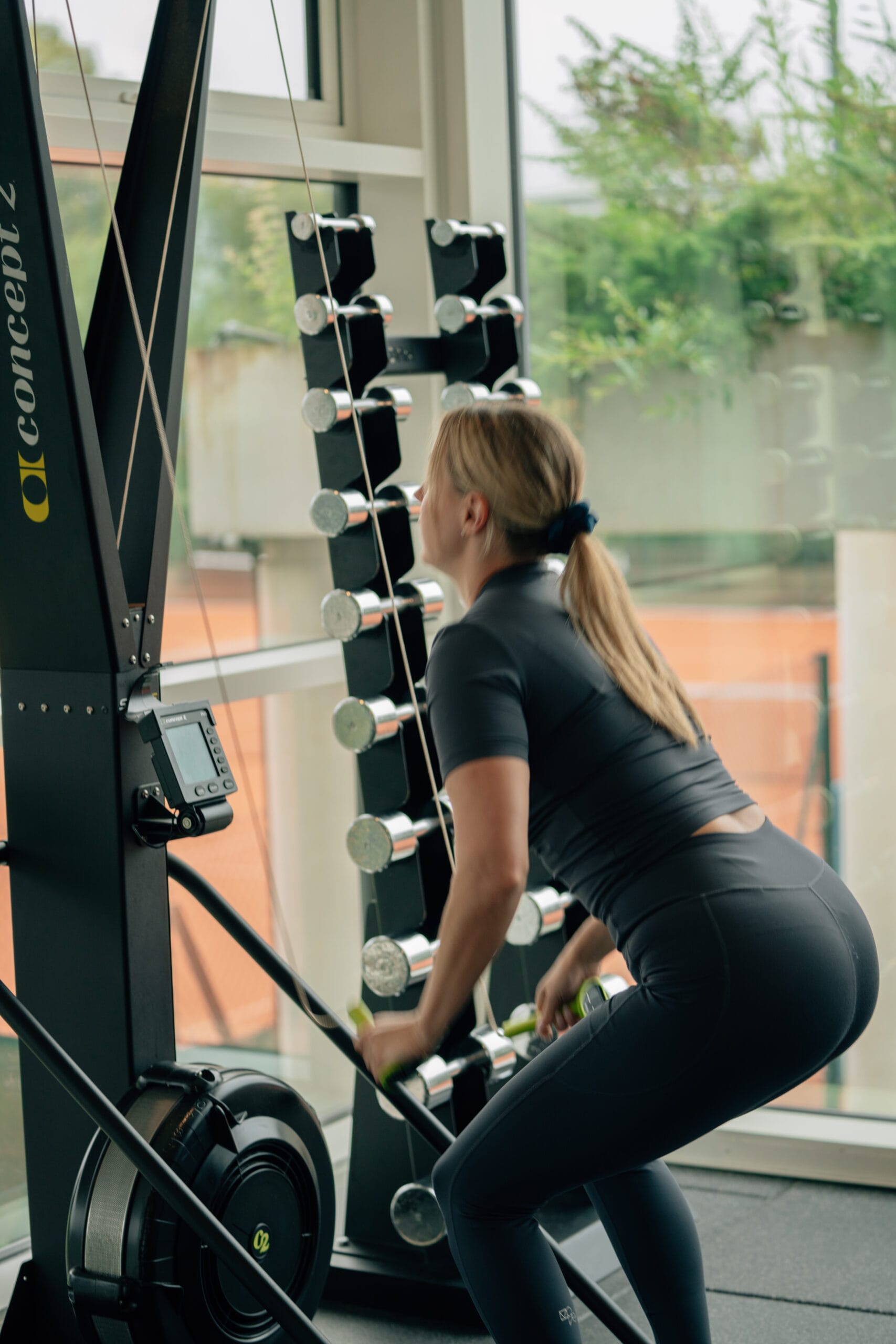
HYROX has exploded in popularity over the past few years. According to the sport’s official website, there were more than 40 global races in 2023, attracting over 90,000 athletes to test themselves in a gruelling exercise race. Each race is held over eight kilometres, with participants running between eight different exercises including a fifty metre sled pull and push, burpees and standing rowing machines.
The health benefits of mixing these explosive movements with endurance is pretty obvious, but it does create injury risk, especially if new competitors jump into their new regime without some planning.
In this podcast, we’ll look at the ideal training mix, recovery and injury prevention methods, how to nail your nutrition for the race itself and how to bounce back to your training routine after the big day.
To help us understand the process of preparing for, and recovering from a HYROX event, we draw on the expertise of two of our physios. Yasmin Milne has represented Scotland at the HYROX World Championships in Nice, while Brad Casey has also participated in multiple HYROX events.
You can watch the full conversation above on our Youtube channel, or read on for some of the highlights. The Pure Pod is available to download on all major podcast platforms, including Spotify and Apple Podcasts.
Here’s what we covered:
- The format of HYROX races, and how it differs from other fitness challenges (02:45)
- Brad and Yas’ respective experiences in HYROX events (06:00)
- Why HYROX has exploded in popularity (08:45)
- The benefits of hybrid training (09:45)
- How you should tailor your training towards peak performance on race day (13:45)
- Training specificity for HYROX (19:00)
- The dangers of overtraining (21:15)
- The injury risks associated with HYROX (24:45)
- How a physio will work with other members of the multidisciplinary team (MDT) to help athletes prepare (29:45)
- Specific consideration for female athletes preparing for HYROX (33:15)
- On the day preparations (35:45)
- Recovery strategies (40:45)
- How an MDT can help athletes with their recovery process (44:45)

Hi Brad, hi Yas. First of all, I thought it would help to outline what HYROX is, and how it differs from other fitness events.
Yasmin Milne: It’s a mixture between running and functional exercises. You run a kilometre, jump on your first station: there’s rowing, sled push and pull, burpee broad jumps, lunges and farmer’s carries. So you run a kilometre, perform a station, and that is eight exercises and eight kilometre running in total. It’s a test of endurance and strength.
Bradley Casey: Obviously with something like IronMan or marathons, there’s no strength aspect; no test of muscular endurance. It’s a little bit more like CrossFit.
What’s the appeal to you? And what has been your experience so far?
Brad: I played a lot of sports in school. You get that competitive element, which unless you’re taking marathon training seriously might be lacking. You lose that competitive element. When I first heard of HYROX, I was really interested in getting that gameday feeling back. I love that preparation, and working towards a goal.
Yasmin: [On appearing at the World Championships] That was unexpected. It came off the back of me doing my first solo. I was lucky to have a coach, and I would not have made it without him.
It’s an extremely well organised event, and they structure it so you feel you’ve had a real achievement being there.
You get the feeling of walking out for your country. You can watch the elite athletes, there’s a board with your name on it. There’s just all of those little things that made it feel special. If anyone has a passion for the event, then it’s definitely not an unachievable goal.
By definition, it promotes hybrid training. There’s strength, there’s endurance. What are the benefits of training in that way?
Brad: The benefit you get is the variety of movement competencies. That’s huge for not overloading muscles too quickly. I’m not seeing a great deal of people coming in with injuries yet. I get a lot of people over marathon season presenting with shin pain, Achilles problems, sore knees, things like that. We get the odd one or two dropping in with a HYROX injury, but that variety of movement, you’re ticking all the boxes that a physio would want you to tick. There’s cardiovascular, you’re doing ‘off-feet’ conditioning with the rows. It’s difficult to overload one area of the body.
Yasmin: You do some heavier lifting, but it’s more about functional strength. I think people think that because race day is intense, that you have to train at high intensity all the time. You really don’t. When you’re doing some sessions at a high heart rate, and then some lower with strength training, you’re giving different parts of your body more time to recover. If you look at endurance athletes, sometimes their issues come from a lack of strength or too much cardio. CrossFitters might have the opposite problem: too much strength, too much explosive movement, not enough cardiovascular fitness.
How should you be dividing your training?
Yasmin: One thing I’ve learned is to do a bit more running than you think. It’s 50% of the race in a way, but you also want your runs to be your active recovery, as the stations can send your heart rate through the roof. If you have the baseline fitness with running, to be able to sustain a lower heart rate while still being able to move at speed, you put yourself in a better situation for the stations.
One of the things you have to consider is exercising under fatigue. So you need to incorporate that into your sessions. I typically do one long run a week at a low heart rate, an interval session, one or two specific HYROX sessions, and then one or two strength specific sessions.
What might a HYROX specific session look like? I’m just thinking that some people might not have the space or the equipment for some of the disciplines in a commercial gym for example.
Yasmin: 100%, you have to be smart with it. With the wobblers, most gyms don’t have that equipment. I substitute that with thrusters, or a grind to overhead with a plate. Look at the movement pattern and adapt. If you don’t have sandbags for the farmer’s carry, can you use dumbbells? Can you do forward lunges on the spot if you don’t have space?
How easy is it to overtrain for an event like HYROX?
Brad: You have to think about the level you want to reach. If you’re trying to be competitive straight out the gate but you’ve never done this before, the temptation is to go hard. Hard sessions all the time. Maybe you’re getting information from Instagram that is obviously not tailored to your needs. If you’re going hard all the time, you aren’t giving your body the chance to recover.
Yas is right about the active recovery. Mix in slower runs so that you aren’t pushing yourself all the time. You’ll burn out otherwise.
Yasmin: Overtraining isn’t just physical. How many plates are you spinning with work, personal life, sleep, nutrition. If you’re not recovering via good sleep, yet you still maintain the same intensity your body will break down. Have awareness over how full your cup is.
You said there’s less risk of injury compared to other sports, but what are the risks?
Brad: Soft tissue mainly, specifically tendons. There’s a lot of squatting patterns, lunging patterns. So that puts pressure on the tendons in your quads and the achilles. There’s a risk when you combine that with running and repetitive stress.
Yasmin: I’d say maybe back pain as well. There’s a lot of hinging movements. Most people have desk based jobs, we sit all day, and we have vulnerable backs. When we do more intense exercises, the back will take more strain than it probably should.
How might you work with a strength and conditioning coach (S&C) to mitigate some of those risks?
Brad: I think the biggest thing to work out before someone enters a training block is if you’re carrying an injury. Get an assessment from a physio first, to make sure any injury is ironed out. Then, you’re on a path to improving that injury with an S&C.
Yasmin: The great thing about S&Cs is they will program clients to work through progressive overload. They will ensure they increase either the weight or the intensity of the program in a way that will reduce the prevalence of injury. They’re extremely beneficial from a training load perspective.
Yasmin, are there any specific training considerations for women?
Yasmin: I would say yes. Knowing and understanding your menstrual cycle is a big thing. The change in your hormones that happens during your cycle will impact your training, and you have to be smart because of that.
In your early phase your hormone levels are at their lowest. Therefore, this is the time where you’re building more strength. You’ll be able to maximize your sessions, your body has easier access to carbohydrates. As you go through the follicular phase, and then through the ovulation phase and the luteal phase, your Oestrogen and Progesterone will be higher. It’s the time for lower intensity sessions, maybe your lower cardiovascular sessions, maximize that aspect.
If you can understand your cycle, you can understand where your hormone levels are going to be at roughly. That’s not easy for everyone. Some people have a less consistent cycle, but you can still find patterns.
How do you prepare for race day itself?
Brad: My first race was in Milan. I tried to make it cheap. I stayed in a hostel, and didn’t sleep a wink for two nights. I was eating pizza and pasta, thinking I was carb loading. I wouldn’t usually eat that stuff. I guess I’m saying all of this to give an example of what not to do.
If you think you’ll take a while to finish, carb loading isn’t a bad idea. Maybe use some gels. Eat things you’re used to eating. You want to know which gels you can take without your stomach being irritated. You absolutely want to know that before race day!
Yasmin: I carb load for a week, and I make sure I’m hydrated, I take electrolytes a good five days leading up to the race. I keep it really simple. I have a bagel with jam and peanut butter, because I know my stomach is fine with it. I limit my fluids for the final 20 minutes before the race, so I don’t need to take a comfort break. I take a carb gel about halfway through, because I know I might dip.
What’s your immediate recovery strategy?
Brad: Cross the line, collapse.
You’re going to be hitting super high heart rates. You’ll want to get that down. Get some water on board if you can.
For the next week your body is going to be in a state of stress. You’ll want to bring that down. Maybe do some gently cycling to get a bit of aerobic work in. You definitely don’t want to be hitting any hard gym sessions or HIIT classes for at least a week.
Yasmin: My recovery has varied quite a lot. Sometimes I can’t eat until the next morning, others I’ve been completely KOed in my bed at 7pm. Once, I went out and ran an 8k the next day. I’m not saying that’s the right thing to do, but listen to your body.
I do think you should move, as otherwise you’ll get stiff. Keep it at a low intensity. Maybe get a sports massage a few days after. Hydration is really important, as you’ll sweat a lot.
Brad: Seeing a soft tissue therapist would be great. Muscle soreness will be through the roof. From an S&C perspective, do what you can over the course of the next two weeks that will make your body feel good as you’re about to look toward another training block.
What advice would you give someone for their first Hyrox?
Brad: Don’t go to Milan!
Enjoy it. It will be hard work so don’t worry too much about time pressures. Have a goal, that’s fine, but it needs to be realistic so you can enjoy it.
Yasmin: You’re there with thousands of people, cheering you on. It’s a massive sense of achievement when you finish. So take all of that in. Go out there, and enjoy it.
Thanks for listening to this episode of The Pure Pod, a podcast brought to you by Pure Sports Medicine. You can catch up on Season 1, and hear every episode of Season 2 by following us on the podcast provider of your choice. It’s available to download on Apple Podcasts, Spotify, or wherever you get your podcasts. You can also watch every episode of Season 2 by subscribing to our Youtube channel.
Planning on your first triathlon? Looking to make that step up in distance? Nursing a nagging injury that is keeping you from training? Our Triathlon screening process helps you perform to your absolute best come race day. Click here, to find out more.
Related Posts


Advice
Over the last 20+ years our experts have helped more than 100,000 patients, but we don’t stop there. We also like to share our knowledge and insight to help people lead healthier lives, and here you will find our extensive library of advice on a variety of topics to help you do the same.
OUR ADVICE HUBS See all Advice Hubs