


The Pure Pod Season 2 Episode 1: Preparing for a Triathlon
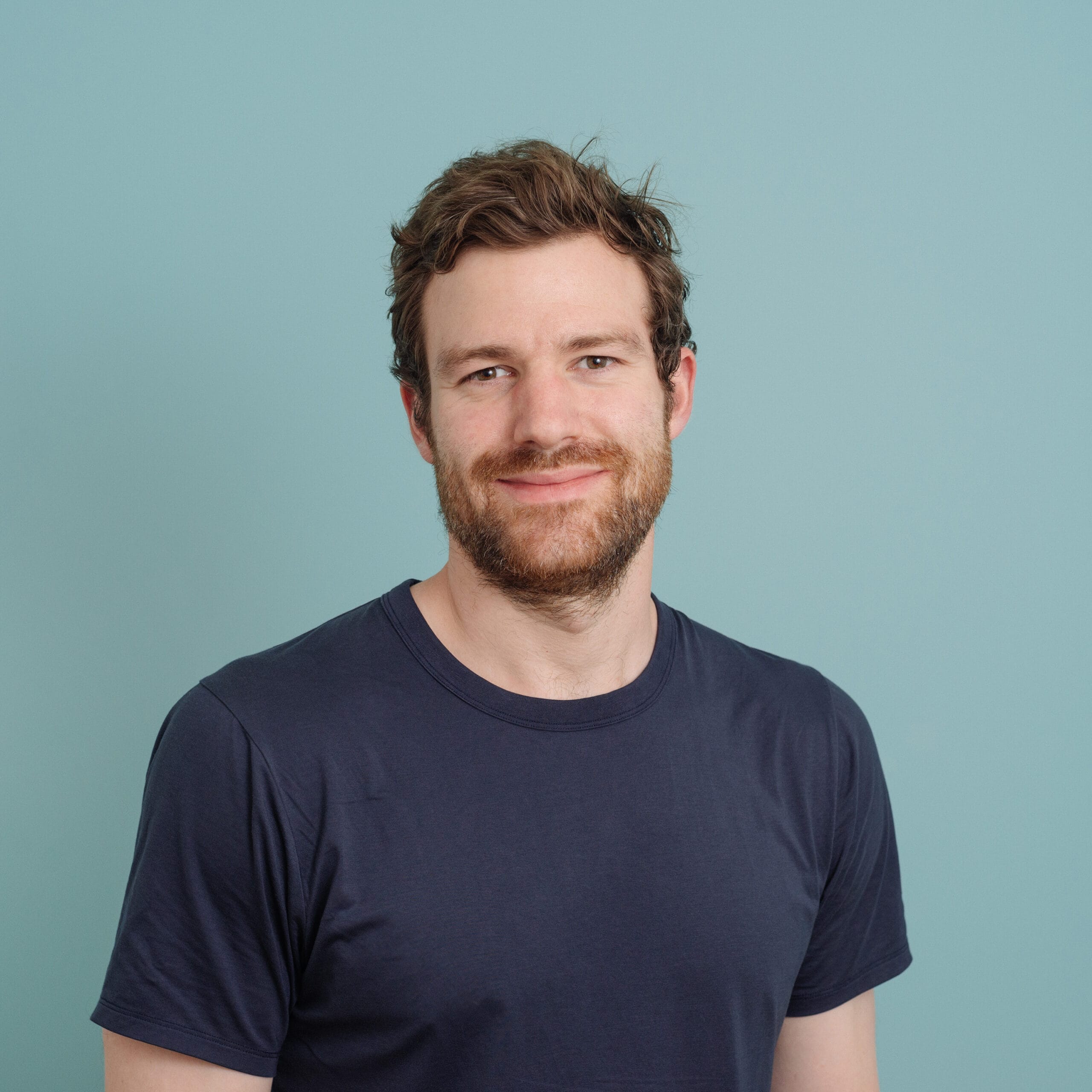
Andy Page
Clinic Manager & Strength and Conditioning Coach
- 27 January, 2026
- No Tags
- 7 min read
Season 2 of The Pure Pod is here!
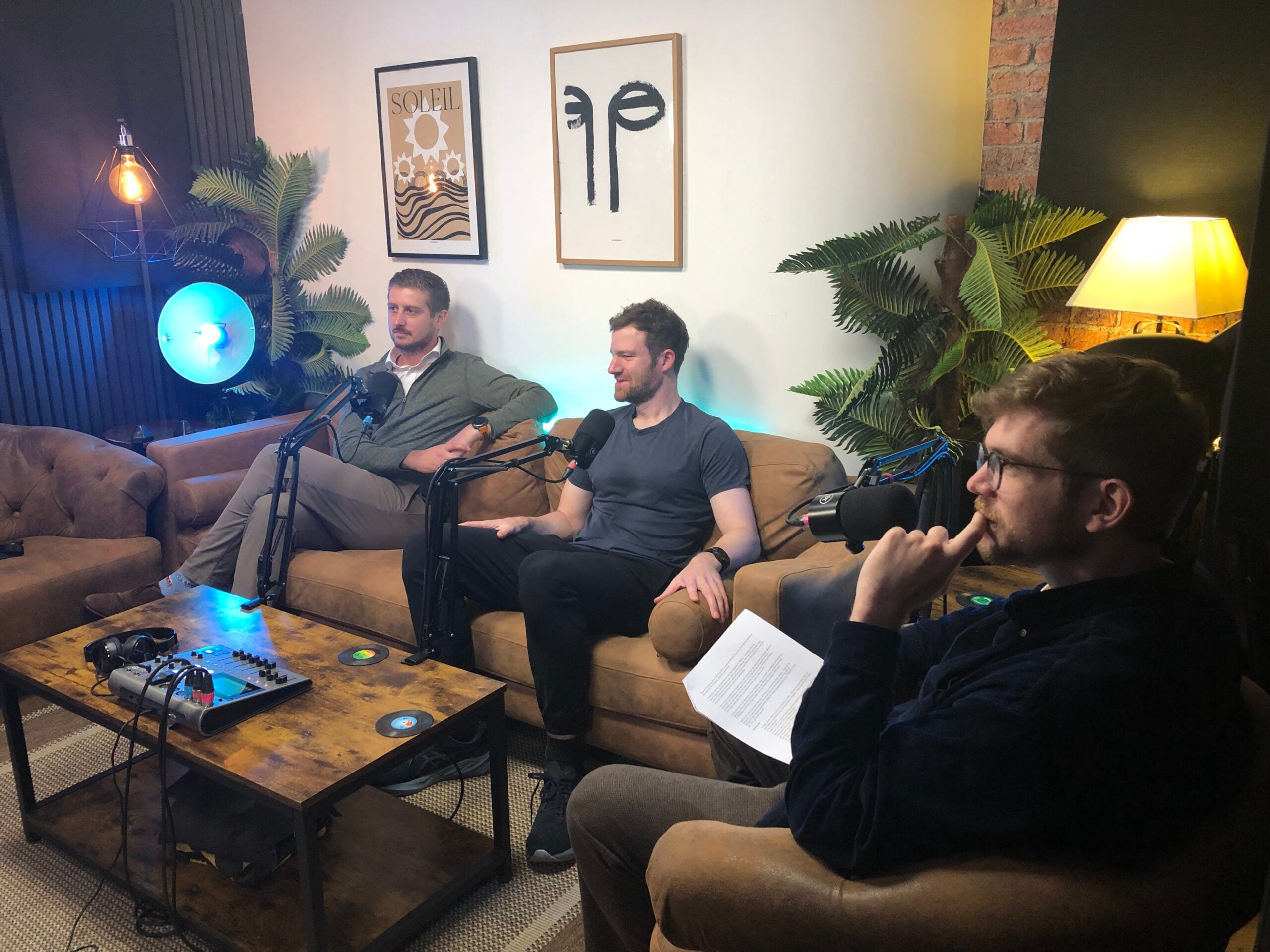
We have six exciting episodes to bring you, drawing on the industry-leading expertise of our clinicians.
You’ll hear all about the prevalence of ACL injuries in the female athlete, access to care for patients with chronic pain and lifestyle diseases and how to train for your first hyrox, plus much, much more.
To kick things off, we’re looking at all things triathlon.
Triathlons are the ultimate test for the inter-disciplinary athlete. Combining running, swimming and cycling, these races offer a unique challenge. Not only do you need a high-level of fitness, but managing the different physical expectations in the build-up to race day requires careful planning and meticulous preparation.
How do you manage and mitigate injury risk across three disciplines with drastically different mechanics and stresses on the body? How do you find the time to balance training alongside a busy routine? As you catch the bug, how do you ramp up training to battle increasing distances, without putting your body under undue stress?
We’re drawing on the expertise of two triathletes, Alex Townsend, a podiatrist with particular expertise in the treatment of injuries related to long-distance running, and strength and conditioning coach Andy Page to talk us through these big questions and more.
You can watch the full conversation below or on our Youtube channel. The podcast is still available on all major podcast platforms. Or you can read on for some of the highlights from the episode.
Here are the topics we covered in the conversation:
- Andy and Alex’s route into triathlon (02:00)
- The mistakes new triathletes tend to make (04:45)
- Finding the time to train (06:45)
- How to train for transitions on race day (09:45)
- Andy and Alex’s worst and best triathlon experiences (14:45)
- The importance of supplementary strength training for triathletes (26:30)
- The prevalence of overtraining in triathletes (33:00)
- How each discipline presents different injury risk (40:45)
- How Andy and Alex would collaborate in a triathlete’s rehab (48:00)
Your speakers:
Hi Andy, hi Alex. I thought we could start with you both telling us a bit about your own experience in triathlon?
Andy: After I finished playing rugby, around 2017, I started thinking about following the normal millennial arc: I wanted to get into endurance sports.
I had a patient here [at Pure Sports Medicine] who was in his late 30s and loved triathlon. He’d been doing it alongside having a family, and he talked about all the great races and places he’d visited. It got me interested. I’d done marathons and half marathons, the next step was trying a triathlon.
It’s been really exciting. I do maybe one or two a year, working up through the distances. It’s sort of been my driving force. It’s spurred me to do more races, find more exotic places to visit.
Alex: It’s a similar sort of story, really. It’s the classic millennial quarter life crisis, isn’t it?
The seed was certainly planted when I first graduated from uni. I was cycling with a chap who was training for an Iron Man in Wales at the time. It planted a seed, I thought: ‘wow, if he can do it, why can’t I?’
I went through my 20s, finished my post-grad. After that I went through a bit of a tough time and thought I needed a challenge. So I just decided to sign up for an Iron Man. It wasn’t the plainest of sailings. I had an arm break and a wrist fracture a couple of weeks before my first race, and had to postpone.
Upon finishing my first Iron Man, I then went and joined Pure [Sports Medicine]. Andy and Chris, who I met in my first week, got me to continue doing more and more races. So it’s just become a bit of a habit.
How do you recommend people get on top of their training? It can be hard to get the requisite time in each discipline when you consider how busy people are with work.
Andy: There are a lot of little hacks that we’ve all employed from time to time when we’ve been training, I think particularly as you build towards the longer distances.
With 70.3, half Iron Man, full Iron Man; so much of it is just organisation of your time. I’ve had experience with patients and friends where they’re training for a half marathon, or they’re training for maybe even Olympic triathlon, and they’ve gone a bit ad hoc. I’ve got some free time here. I’ll do a bit there. My afternoons are clear on Friday, I’ll go for a run. The longer the distances, the more you have to structure your week for training.
I will try to run into work on a couple of days. You cycle commute, right Alex?
Alex: So I live in southwest London, commuting up into the city. It’s never going to be that really high quality training that you’re going to get on a Zwift session in the evening, where you can just absolutely go in the right zones, right power, etc, but at least you’re able to train that time in legs, time in the saddle. It’s about finding these little niches.
How much time should you focus on each discipline?
Andy: We work on a general rule of thumb that 60% of your time should be bike, 30% of your time running, and 15 to 20% swimming. That’s just a ballpark estimate.
You can shift those around if you are a particularly poor swimmer and you want to spend more time swimming. A lot of triathletes are carrying an injury or two from the run, so maybe they do a little bit less running. Some people love cycling, and so they’ll do more of it; the cost of more time on the bike is usually fairly low.
How important is strength training? Can it help with mitigating injury risk?
Andy: It’s often underplayed. We neglect that we still have elements of our physiology that we can’t stimulate with endurance alone.
So when we look at doing gym work for individuals, we’re saying: ‘we want you to have a good base of strength across, not only for your lower body which is often thought about, but also your upper body for swimming’.
When we do that, we can potentially reduce injury incidence, which is absolutely massive. We often think injury incidence reduction is ‘nice’, but we all want to push performance. I tell you what, if you miss three weeks, four weeks, five weeks of training because of an injury, your performance will decline.
The more back to back weeks of good, injury free training, the better you’ll do. Strength is a huge component of that.
A nice base of strength will benefit your performance. You’ll use a lower percentage of your strength every single time your foot hits the ground, on every pedal stroke, every stroke of the swim. So efficiency wise, you’ll have more energy for longer.
What are the risks of jumping up in distance too quickly?
Alex: Since Covid, I’ve seen a lot of people going straight into the long distances. They’re going straight to Iron Man; previously you might start with an Olympic distance, a half Iron Man. You would work your way up.
They’ve not figured out what their base level is, so they’re massively breaching this acute, chronic workload ratio, breaching the capacity of what their tissues can take.
In clinic, when I have people coming in to see me, they are coming for a biomechanical assessment. I’m going to look at their running to see if there is something to do with their anatomy or their movement patterns that might contribute to this. And you know, often there is something, but it’s not going to be the silver bullet of, ‘yes, you have this injury because you’ve got a contralateral hip drop or because your foot’s a bit more abducted’. It’s often, ‘yeah, we’ve got a little bit of that, but we’re lacking the conditioning. We’ve reached our capacity’.
Can focussing on the different disciplines help if you’re carrying a running injury? Or if you have an upper body issue that might limit your swim?
Alex: That’s a good question. I often joke when I have a patient who is just a runner coming in with a running injury, I go, ‘Oh, have you considered triathlon’? They’re still going to have that cardiac load across all three disciplines. But I’m quite a big advocate of someone coming with a running injury, can I get them spinning a little bit more maintaining that cardiac load?
Andy: There’s an upside that we can lean into our swimming and cycling a bit more. We will, as you say, maintain cardiac load. A lot of that is psychological as well, because you’re getting the drive from completing sessions, and you’re pushing your physiology in the training session.
However, there isn’t necessarily a complete substitute. I’ve had people come in and say, ‘Well, I’ve got an Achilles problem, can I not use the cross trainer instead?’ Now there’s a problem with that. Running is still a relatively specific activity. If you’re not impacting the grounds when you’re running, you’re not building up a tolerance for that, and you do need that to an extent.
How might you work together to help a patient that is presenting with a lower leg injury as a result of their training?
Alex: I will go through my assessment and diagnose them. I’ll have a look at them on the treadmill. Go, ‘okay, these are some of the things we could be working on if they are injured’.
We’ll probably start off with a bit of physio, supplemented with strength and conditioning. If they’re one of those patients who are completely asymptomatic, but wanting to optimise things, that’s where my hand over to Andy would be a little bit more appropriate, and it’s normally quite a nice transition.
Andy: From my point of view, we have those kinds of patients that present to you with an injury, but I also have ones that I’m seeing concurrently. They’re already seeing me because they’re training, or it’s like an autumn period, and they’re building up for next year doing strength.
We’ve had this recently. I had a patient that just started to get some plantar pain. That’s when I say ‘this is a good opportunity to speak to my colleague, Alex, and he can have a look at your footwear, have a look at your gait. Are there some quick wins that might help alleviate that so you can continue training?
Thanks for listening to this episode of The Pure Pod, a podcast brought to you by Pure Sports Medicine. You can catch up on Season 1, and hear every episode of Season 2 by following us on the podcast provider of your choice. It’s available to download on Apple Podcasts, Spotify, or wherever you get your podcasts. You can also watch every episode of Season 2 by subscribing to our Youtube channel.
Planning on your first triathlon? Looking to make that step up in distance? Nursing a nagging injury that is keeping you from training? Our Triathlon screening process helps you perform to your absolute best come race day. Click here, to find out more.
Related Posts

Advice
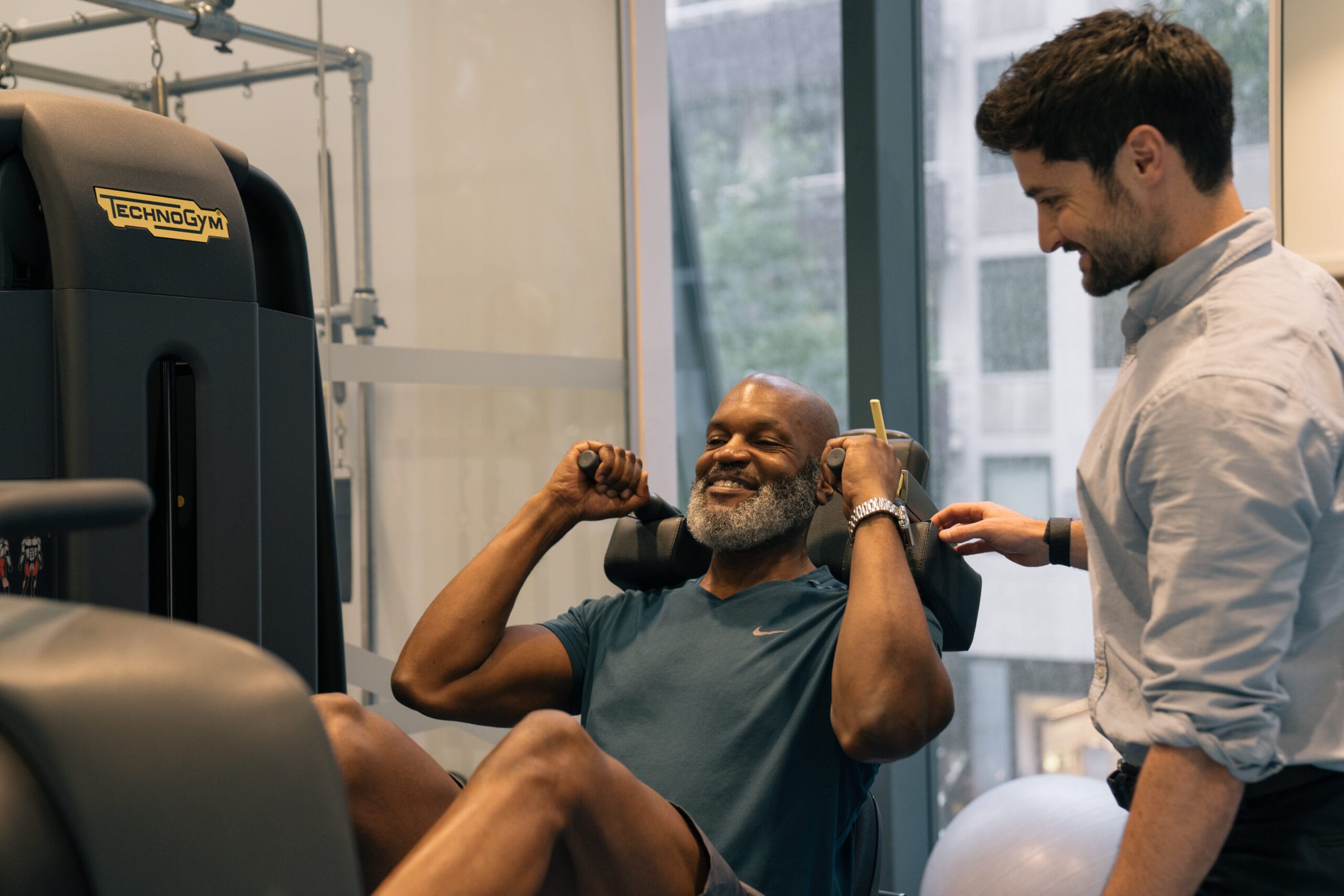
Over the last 20+ years our experts have helped more than 100,000 patients, but we don’t stop there. We also like to share our knowledge and insight to help people lead healthier lives, and here you will find our extensive library of advice on a variety of topics to help you do the same.
OUR ADVICE HUBS See all Advice Hubs